I Got 32 Cold LinkedIn Messages in 2 Weeks. I Answered One.

Omri PeledCo-Founder & CPO, Propello
32 cold outbound messages landed in my LinkedIn inbox in the last 2 weeks. I'm meeting with only one of them. The other 31 failed for the same few reasons: written entirely by AI, a one-liner plus a calendar link with zero context, or my name spelled wrong. The one that worked was short, relevant and well timed.
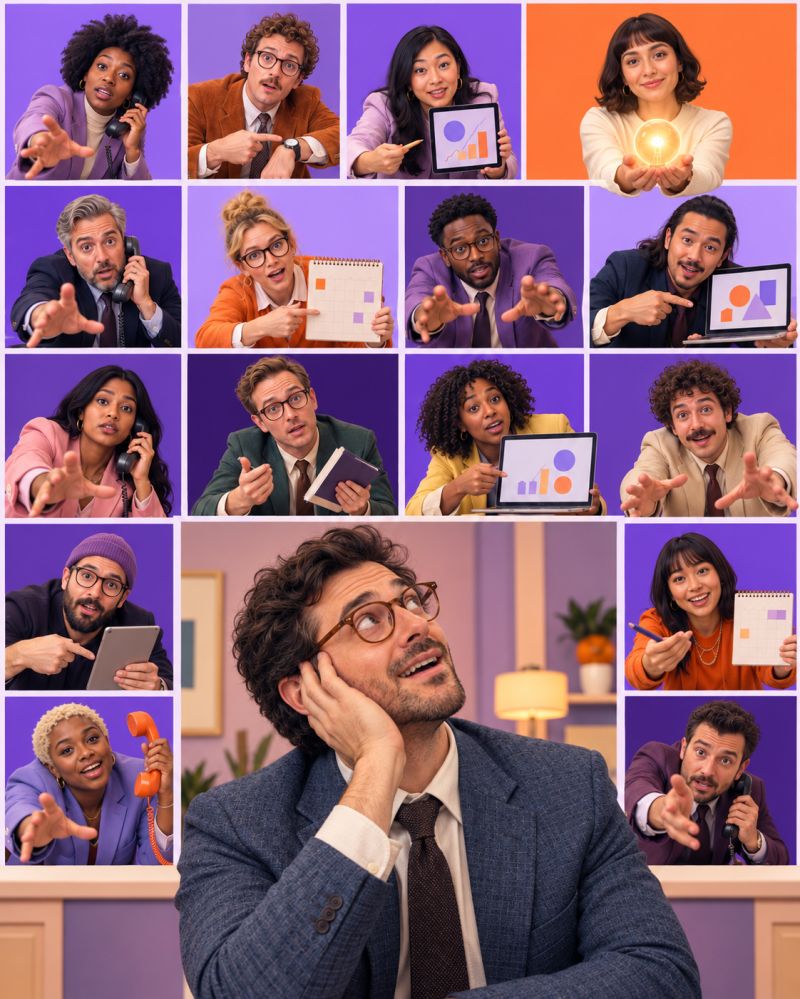
I went back through all 32 to see what separated the one from the rest. Here's the autopsy on the other 31, and a close look at the message I actually answered.
Key takeaways
- 32 cold LinkedIn messages in 2 weeks led to one meeting.
- Of the other 31, 20 were written entirely by AI, 15 were a one-liner plus a calendar link with zero context, and 6 got my name wrong.
- Lazy outreach isn't something new. AI just put it on steroids.
- The one cold message I answered had three things: context, timing and length.
- Real intent is a question the buyer is already thinking about. A funding round or a job change bought from a database doesn't qualify.
- 31 of those messages ASKED me for something. One GAVE me something.
What went wrong with 31 of 32 cold LinkedIn messages?
The 31 cold LinkedIn messages I ignored failed in three ways. 20 were written entirely by AI. 15 were a one-liner plus a calendar link with zero context. 6 got my name wrong. The numbers add up to more than 31 because plenty of messages managed two failures at once.
| What went wrong | Messages |
|---|---|
| Written entirely by AI | 20 |
| One-liner + calendar link, zero context | 15 |
| Got my name wrong | 6 |
Start with the name, because it's the cheapest thing to get right. 6 got my name wrong. I know it's not an easy one to pronounce, but in writing... I mean, come on!!
My name is printed at the top of my LinkedIn profile, one copy-paste away from the message box. A sender who misses it has told me how much care went into everything after the greeting. I stop reading there, and I think most people do.
None of the three failures is about writing skill. Each one is a sender skipping the two minutes it takes to look at the person on the other side.
How can you tell a cold message was written entirely by AI?
A cold message written entirely by AI gives itself away through its patterns. 20 of the 31 were written ENTIRELY by AI. You can see it coming a mile away. The em dashes. The colons. The "not X, it's Y" formula every model uses when it's trying to sound "profound".
An example of that formula, made up for illustration: "We're not another sales tool, we're your revenue partner." Read ten of those in one week and the eleventh never gets past the first line.
I also set a small trap. I added a purple circle before my LinkedIn name ("🟣 Omri Peled"), so when a message is fully AI-generated, it's easy to spot... and funny. A person typing a greeting leaves the circle out. A tool that pulls the name field and pastes it into a template keeps it, and the message opens by greeting the emoji.
The pattern itself is a small problem. The bigger one is what the pattern tells the reader. If nobody on the sending side read the message before it went out, the person receiving it has no reason to read it either.
Why does a one-liner plus a calendar link get ignored?
A one-liner plus a calendar link gets ignored because it asks for a meeting before giving a single reason to take one. 15 of the 31 messages did exactly that. No idea who I am, what we're building, or why this week. Their prospecting tool says there's a good ICP match, so they blast away.
ICP stands for ideal customer profile, a description of the company and person most likely to buy a product. An ICP match explains why the seller wants the meeting. It says nothing about why the buyer would want it.
Look at the trade from the reader's side. The sender spent ten seconds. The calendar link asks me for thirty minutes, plus the work of figuring out who they are and what they sell. Nobody takes that deal from a stranger.
Buyers say the same thing in surveys. In a Gartner survey of 632 B2B buyers run in August and September 2024 and published in June 2025, 73% said they actively avoid suppliers who send irrelevant outreach. So a zero-context message does more than lose one reply. It can cost the sender the account.
Did AI make cold outreach worse?
AI didn't invent bad cold outreach. Sooo, lazy outreach isn't something new. AI just put it on steroids. Templates, mail merge and "just bumping this up" were filling inboxes long before any model wrote a sentence. What AI changed is the cost and the volume.
Before AI, a lazy message still took a few minutes to write, and that put a ceiling on how many one person could send. Now the same message costs nothing, arrives in clean grammar, and goes to everyone the prospecting tool flags. The laziness is the same. There's just a lot more of it.
Cold email shows where volume without relevance ends up. Belkins, an outbound agency, analyzed 7,530,489 cold emails from its client campaigns in 2025 and counted 34,393 replies. That's a 0.45% reply rate, and it slipped from 0.50% in the first half of the year to 0.40% in the second. The data covers email, and it doesn't measure how much of that is down to AI. It does show how little a cold message is worth when it looks like every other one.
My inbox did better than that. One in 32 is about 3%. But the one that got through looked nothing like the other 31.
What made the one cold message worth answering?
The one cold message I answered had no hook, no framework, no ask for 15 minutes, no calendar link. I replied, and we met, because it had three things: context, timing and length. She knew our space, the message landed while I was already thinking about its question, and it was short enough to answer.
1. Context
She knew our space and had clearly done the work. Tried our product. Did her reading, and that's it - one sentence was enough. No flattery. No fake personalization. Just amazing context and relevance - she engaged with an idea I actually care about - a new angle - she actually got me thinking. That's a win!
Fake personalization is a detail lifted from a profile and dropped into a template, like "Loved your recent post!" Context is different. Context means the sender understands the problem well enough to say something new about it. The first one proves a tool scraped my profile. The second proves a person thought about my work.
2. Timing
Call it luck or good research (signal much...), but it landed while I was already thinking about that exact question. That's real intent. Not a funding round. Not a job change. Not some mundane signal we buy from a database. It mattered to me right then.
An intent signal is a data point a seller uses to guess that a buyer is ready to talk. Most signals for sale describe a company event. A funding round says the company has money. It says nothing about what one person at that company is wrestling with this week. The signal that counts is the question already on the buyer's mind, and the way to find it is to pay attention to what that person is writing, building and asking about.
3. Length
It was short enough to read and easy enough to answer.
Short is a courtesy, and it also works. LinkedIn analyzed tens of millions of recruiter InMails sent between May 2021 and April 2022. Messages under 400 characters got a response rate 22% above average. Messages over 1,200 characters came in 11% below. That data is from recruiting and a few years old, but it matches what my inbox told me.
Easy to answer matters as much as short. Her message needed one line back from me. The one-liners with a calendar link were short too, but answering them meant committing half an hour.
What does it mean to give instead of ask in a cold message?
Giving in a cold message means the reader is better off for having read it, even if they never reply. The message I answered gave me a new angle on an idea I care about. The other 31 asked for my time, my attention or a slot on my calendar, and offered nothing first.
Three questions to ask before sending a cold LinkedIn message, one for each thing the good message had:
- Context. Can I say something about this person's work that I could only know by trying their product or reading what they wrote?
- Timing. Is this something they are thinking about now, or is it only a database telling me they fit?
- Length. Can they read it in one breath and answer it in one line?
If the answer to any of them is no, the message is an ask. It will land in the pile with the other 31.
MY TAKEAWAY: 31 of those messages ASKED me for something. One GAVE me something.
FAQ
How long should a cold LinkedIn message be?
A cold LinkedIn message should be short enough to read and easy enough to answer. In the message I replied to, one sentence of context was enough. LinkedIn's recruiter InMail data from 2021-2022 found messages under 400 characters got a response rate 22% above average.
Should I include a calendar link in a cold message?
No, not in the first message. 15 of the 31 cold messages I ignored were a one-liner plus a calendar link with zero context. The message I answered had no calendar link and no ask for 15 minutes. The meeting came after I replied.
How do people spot AI-written outreach?
People spot AI-written outreach by its patterns: the em dashes, the colons, and the "not X, it's Y" formula. I also added a purple circle before my LinkedIn name, so a fully automated message greets me as "🟣 Omri". 20 of the 31 messages I ignored were written entirely by AI.
What is real buyer intent?
Real buyer intent is a question the buyer is already thinking about when the message arrives. A funding round, a job change or another signal bought from a database describes a company event. It doesn't tell a seller what matters to one person right then.
What makes someone reply to a cold message?
Three things made me reply to one cold message out of 32: context, timing and length. The sender knew our space and had tried our product, the message landed while I was thinking about that exact question, and it was short. It gave me something before asking for any