For the 5%, the Job Is Conversion. For the 95%, the Job Should Be Memory.

Omri PeledCo-Founder & CPO, Propello
Only around 5% of a B2B market is in-market at any one time. Most GTM is built as if everyone is, with "Book a demo" waiting at every turn. For the 5%, the job is conversion. For the 95%, the job should be memory.
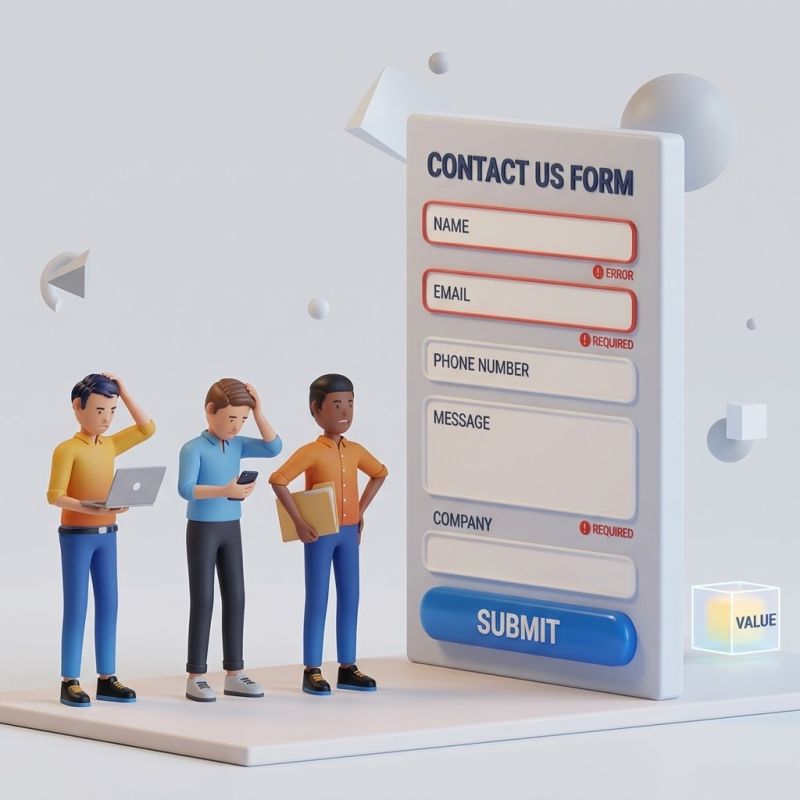
I ran into this from the buyer's side over the last two weeks, and it changed how I look at our own go-to-market.
Key takeaways
- Buyers who are in-market are usually around 5% of the market. The other 95% aren't in the market.
- Most GTM assumes every buyer is ready for the next step: "Book a demo". "Start a trial". "Talk to sales". "Sign up".
- We judge everyone by whether they acted or not. Converted or not. That is the biggest failure.
- For the 5%, the job is conversion. For the 95%, the job should be memory.
- A buyer can leave without booking a demo and still leave with a clearer understanding of their problem and a name attached to a possible solution.
- Nothing converted, but something changed. That's real nurturing.
What does an in-market B2B purchase actually look like?
An in-market B2B purchase looks like a handful of short moments spread over days or weeks. Ours took five hours across two weeks. An in-market buyer is one who is actively evaluating a product category and could buy soon. Even that buyer gives the category very little time, in small pieces.
We're testing AI GTM engineer tools. Lots of research. Testing. Validating with Claude. Internal discussions. Back and forth. We met with 4-5 vendors.
All in all, five hours spread across two weeks - a collection of short moments…
AI GTM engineer tools are software products that use AI to do the work of a GTM engineer, the person who builds and automates a go-to-market team's data and outreach workflows.
Look at what filled those five hours. Research on our own. Testing. Checking what we found with Claude. Talking it through internally. The vendor meetings were only one part of it.
That is what a vendor gets from a buyer who is actively looking: a few minutes here, a few minutes there, in between everything else the buyer has to do. A buyer who isn't looking gives even less.
How much of a B2B market is in-market at any one time?
Around 5% of a B2B market is in-market at any one time, as a rule of thumb. From a market macro perspective those hours actually represent the available market: a collection of buyers who are currently in-market - this is usually around 5% of the market.
The other 95%… aren't in the market.
Yet, so much of our GTM assumed it is.
The figure comes from the 95-5 rule. Professor John Dawes of the Ehrenberg-Bass Institute set it out in a May 2021 report, which says that up to 95% of business clients are not in the market for many goods and services at any one time.
The reasoning is simple arithmetic. Companies change providers for many services about once every five years. That puts roughly 20% of buyers in the market over a full year, and about 5% in any one quarter.
Dawes is clear that 95% is not a precise number. The share depends on how often a category gets bought. In a category that companies buy every two years, about 13% of buyers are in the market in a quarter. The point survives the adjustment: at any moment, most of a market is not looking.
As an illustration, take a target list of 1,000 accounts. At 5%, about 50 are in-market this quarter. The other 950 will see the same website, the same ads and the same emails. They can't use any of it today.
Why does "book a demo" at every touchpoint fail most buyers?
"Book a demo" at every touchpoint fails most buyers because it assumes the buyer is ready for the next step, and most buyers aren't. A CTA, or call to action, is the button or line that tells a visitor what to do next. When every CTA asks for a sales conversation, the 95% have nothing to say yes to.
Every point of engagement assumed I was ready for the next step. But I wasn't.
"Book a demo". "Start a trial". "Talk to sales". "Sign up".
convert convert convert…
And I was one of the 5%. I was actively looking, and I still wasn't ready at most of those moments. I wanted to understand something first. The only thing on offer was a meeting.
We build entire experiences around getting buyers to act now. On the spot.
Then judge everyone else by whether they acted or not - Converted or not.
And that's where I feel the biggest failure is.
A yes-or-no measure throws away everything in between. A visitor who read three pages, understood their problem better and left is recorded the same way as a visitor who bounced in four seconds. Both "did not convert". Under that scoring, 95% of the market shows up as failure, every quarter, no matter what they learned.
From the buyer's side, a demo is a real cost. It means a slot in the calendar, a salesperson, and a follow-up sequence afterwards. A buyer who isn't in-market has no reason to pay it. So they leave, and we log a loss.
What should GTM do for the 95% who aren't in-market?
For the 95% who aren't in-market, GTM should build memory. The job should be different for different groups. For the 5%, the job is conversion. For the 95%, the job should be memory. Memory here means that when the buyer does enter the market, the buyer already knows the vendor and what problem the vendor solves.
They need to know you exist. Understand the problem you solve. Associate your solution with that problem. And that takes more than just another CTA.
| The 5% (in-market) | The 95% (not in-market) | |
|---|---|---|
| The job | Conversion | Memory |
| What the buyer needs | A clear next step | To know you exist, understand the problem you solve, and associate your solution with that problem |
| What a good visit leaves behind | A demo, a trial, a conversation | A clearer understanding of their problem, a different view of the options, and a name attached to a possible solution |
This is also how Dawes explains advertising in the 95-5 report. Because most buyers aren't in the market when they see a message, the message works mainly by building and refreshing memory links to a brand. Those links come into play later, when the buyer starts looking.
And the buyer's memory decides a lot. In 6sense's 2025 Buyer Experience Report, the winning vendor was already on the buyer's Day One shortlist 95% of the time. A vendor that isn't remembered when the buying starts is rarely added later.
So the 95% are next quarter's and next year's 5%. They will buy. The open question is whose name they will have in mind when they start.
What is real nurturing?
Real nurturing is changing what a buyer knows before the buyer is ready to buy. A buyer can leave without booking a demo and still leave with a clearer understanding of their problem, a different view of the options, and a name attached to a possible solution.
Nothing converted, but something changed.
That's real nurturing - not just an outdated sequence also known as a graveyard for leads.
Nurturing is the work of staying useful to a buyer who isn't ready yet. A sequence is a scheduled series of automated emails sent to a lead. Most sequences nurture nothing. They repeat the same ask, a meeting, to a person who wasn't ready for it the first time, until that person unsubscribes or stops opening. That is how the graveyard fills up.
The three things a buyer can leave with make a useful test for any page, email or conversation. If the visitor leaves without converting:
- Do they understand their problem more clearly than when they arrived?
- Do they see the options differently?
- Is our name attached to a possible solution in their mind?
If the answer to all three is no, the experience did nothing for the 95%. It was built for the 5% and everyone else passed through it.
A second test is simpler. Count the things a visitor can do on the site other than ask for a meeting, start a trial or sign up. For many B2B sites the honest count is close to zero.
If we only offer one option (meeting, meeting, meeting), how can we become the choice for tomorrow?
FAQ
What is the 95-5 rule in B2B marketing?
The 95-5 rule says that at any one time only about 5% of B2B buyers are in the market for a given product, and up to 95% are not. Professor John Dawes of the Ehrenberg-Bass Institute set it out in a May 2021 report. Dawes describes it as a rule of thumb that varies by category.
What percentage of B2B buyers are in-market?
Usually around 5% of a B2B market is in-market at any one time. The figure comes from categories that companies buy about once every five years, which puts about 20% of buyers in the market per year and about 5% per quarter. Categories bought more often have a higher share.
Why isn't "book a demo" enough?
"Book a demo" only works for the buyers who are ready for a sales conversation, which is usually around 5% of the market. The other 95% have nothing to say yes to, so they leave and get counted as failures. They need to know the vendor exists, understand the problem it solves, and associate the solution with that problem.
What should marketing do for buyers who aren't ready to buy?
For buyers who aren't ready to buy, the job should be memory. A buyer can leave without booking a demo and still leave with a clearer understanding of their problem, a different view of the options, and a name attached to a possible solution. Nothing converted, but something changed.
What is real lead nurturing?
Real lead nurturing changes what a buyer knows before the buyer is in-market. An automated sequence that keeps asking for a meeting is a graveyard for leads. Nurturing works when the buyer comes away understanding their problem better and remembering who can solve it.